Core Considerations for Variable Message Sign (VMS) Rental vs Purchase
author: hankun
2025-11-15
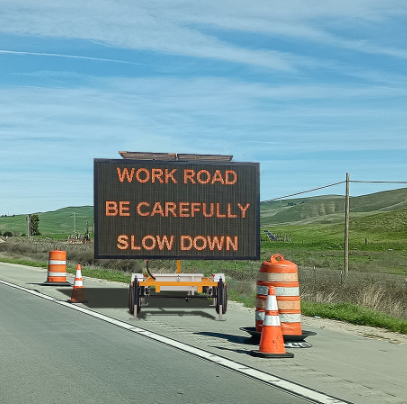
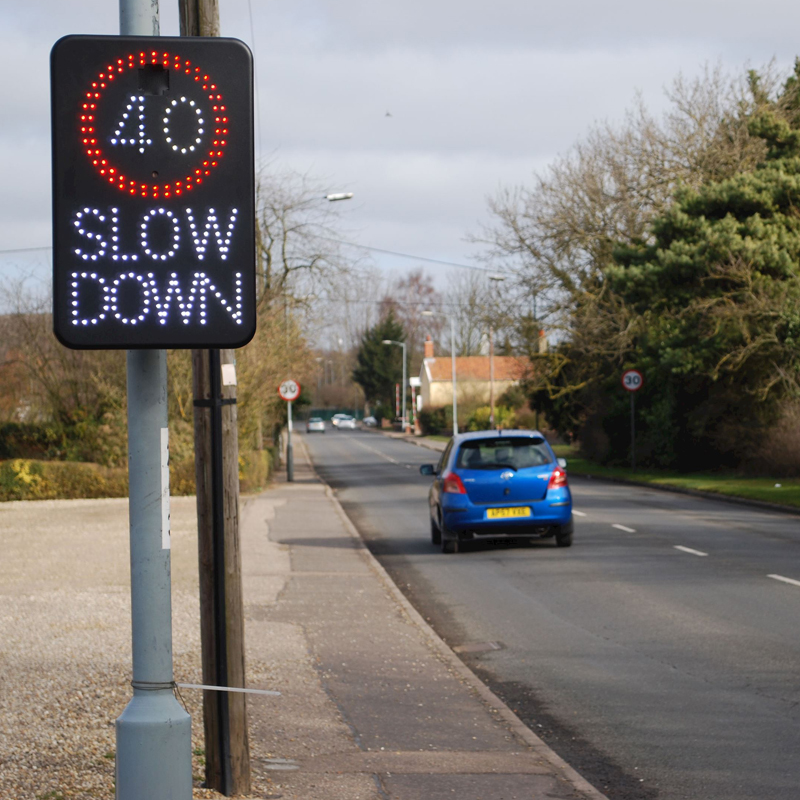
As a core device for road safety and traffic guidance, the choice between renting and purchasing Variable Message Signs (VMS) has always been a hot topic among traffic management departments and engineering enterprises in the United States (US), Canada (CA), Australia (AU), and New Zealand (NZ). HANKUN Factory, which has been deeply engaged in the VMS field for 20 years, offers a key insight from the equipment manufacturing perspective: "The decision-making essence of VMS lies in the matching between the demand side and the supply side. The cost, compliance, and iteration issues that concern users are exactly the core focus of manufacturers." Discussions among Google users also confirm this logic — the core of decision-making is a balance between "short-term costs and long-term value, flexible needs and fixed investments," and the concerns of users in different countries are closely linked to their local scenarios.

The core appeal of the purchase model lies in controllable long-term costs, but the high threshold makes many users in various countries hesitate. Users from the US Federal Highway Administration (FHWA) mention that the purchase price of a mobile VMS that meets DOT certification ranges from approximately $15,000 to $30,000, placing significant pressure on small and medium-sized engineering contractors. In response, HANKUN Factory points out: "For the US market, we reduce the cost of VMS that meets DOT standards through modular production. The unit price can drop by 15% for bulk purchases, and we provide 5 years of free upgrade services to solve the technology iteration issues worried by VicRoads users." For the -40℃ low-temperature resistant VMS concerned by users from the Ministry of Transportation of Ontario (MTO) in CA, HANKUN has realized the localization of core components, reducing the customization cost by 20% compared with imported equipment, while passing CA CSA certification to ensure compliance. The upgrade dilemma of traditional LED-VMS purchased by AU VicRoads (Victorian Road Authority) in 2018 is also the motivation for HANKUN to launch the "intelligent VMS compatible interface" — new equipment can be directly connected to the old system, reducing the upgrade cost to 30% of the purchase price.
The flexibility of the rental model accurately matches temporary needs, but service shortcomings have become a common pain point. Users from NZ Transport Agency (NZTA) favor the low cost of renting, and the "quick-dismantling VMS" provided by HANKUN Factory for rental companies can reduce the equipment deployment time from 4 hours to 1.5 hours, further enhancing the efficiency advantage of rental. In the post-hurricane emergency guidance scenario in Texas, US, the "emergency VMS reserve warehouse" jointly built by HANKUN and local rental companies can achieve delivery within 2 hours, which is 10 times faster than traditional purchase response. To address the additional rental fees complained by users in Alberta, CA, HANKUN has launched an integrated "rental + transportation + installation" package, reducing the proportion of additional costs from 30% to 12%; for the VMS failure problems reported by users in Western AU, HANKUN has pre-installed a "remote diagnosis module," enabling 90% of faults to be resolved online and accelerating the on-site maintenance response to within 24 hours, completely eliminating potential construction safety hazards.
The specific demands of users in various countries are exactly the core basis for HANKUN to optimize its VMS product matrix. For the DOT compliance needs of US users, HANKUN has achieved 100% of its VMS products passing FHWA certification; the low-temperature environment needs in CA have led to the development of HANKUN's -40℃ solar-powered VMS; the sparsely populated characteristic of AU has driven the annual purchase volume of its solar-powered VMS to increase by 25% locally; for the preference for mixed models in NZ, HANKUN provides a hierarchical plan of "exclusive models for short-term rental + customized models for long-term purchase." For the common data security concerns of users in the four countries, HANKUN provides "local data encryption modules" for purchasing users, while rental users can access exclusive cloud platforms to ensure clear ownership of traffic data — this design has also continuously increased its VMS market share in the four countries.
In summary, there is no absolute answer to the choice of VMS: for short-term, scattered projects or emergency scenarios, rental is a cost-effective choice; for long-term, fixed-road operations or customized needs, purchase is more advantageous. The practices of HANKUN Factory and the discussions of users in the four countries together point to the core — decision-making must be anchored on four factors: "frequency of use, project cycle, cost structure, and local standards," rather than considering price alone. For the VMS industry, this means that full-chain services including "rental + purchase + operation and maintenance + customization" are the key to adapting to markets such as the US, CA, AU, and NZ.
Amber VMS Pixel Structure & Bulk Price Guide 2025 | HANKUN
A Hardcore Equipment Under Environmental Inspections: This Zero-Emission Solar Lighting Lighthouse is Revolutionizing the Infrastructure Industry
Related Article

Get the engineer's guide to amber VMS pixel structure (1-LED vs 4-LED). Compare A/B/C grade boards & bulk factory prices for 5+ units from China
Amber VMS Pixel Structure & Bulk Price Guide 2025 | HANKUN

A Hardcore Equipment Under Environmental Inspections: This Zero-Emission Solar Lighting Lighthouse is Revolutionizing the Infrastructure Industry
A Hardcore Equipment Under Environmental Inspections: This Zero-Emission Solar Lighting Lighthouse is Revolutionizing the Infrastructure Industry